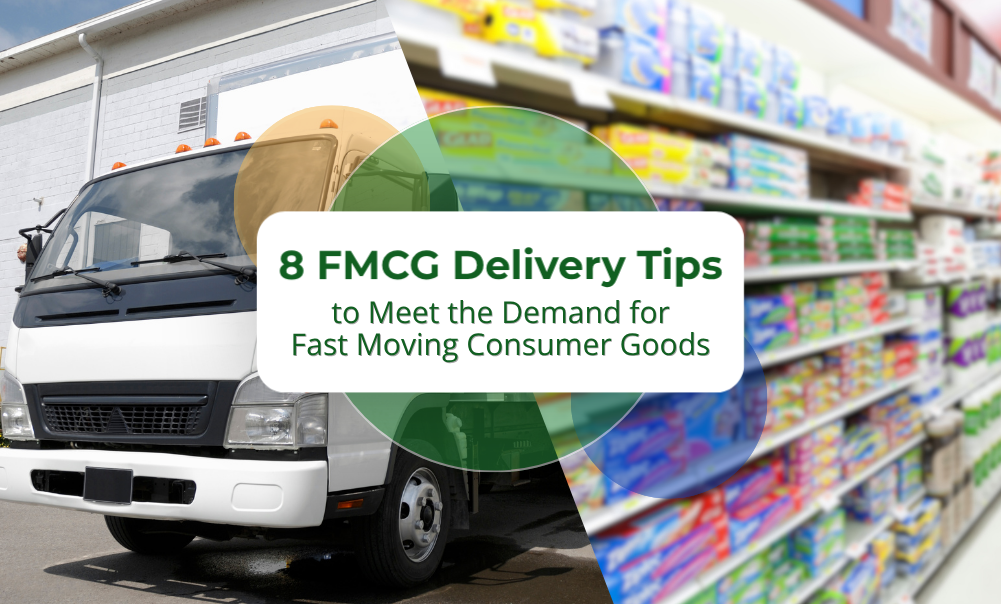
Rapid movement and high-volume production defines the world of fast-moving consumer goods (FMCG). In the Philippines, these products are sold fast not just because of its affordability, but also its high demand. Recent developments in the domestic FMCG industry show optimistic forecasted growth of up to 4% in 2026. Because of its highly scalable nature and prospective growth, the FMCG delivery process needs to be accurate and seamless from start to finish.
In order to meet the demands of FMCG products, you must optimize your process to achieve high-volume production, speedy and risk-free delivery. This guide provides valuable tips and tricks to improve your mid to last-mile product transportation.
8 Tips for Optimizing Your FMCG Delivery Process
1. Partner with a reliable truck rental service.
Dependable trucking services can help you fulfill every last mile FMCG delivery task. This leg of the supply chain is particularly complex and critical, and industry experts can help you meet those demands. By using a trucking company, you can access specialized cargo handling, scalable solutions, and most importantly, a fleet of light, medium, and heavy-duty trucks fit for your needs.
2. Speedy handling cuts down unnecessary wait.
Special handling for fragile fast-moving consumer goods can potentially slow down delivery time. It can jeopardize not just customer trust, but also sales, warehousing costs, and product integrity. A last-mile delivery service in the Philippines lets you access a wide selection of customized trucking units, licensed drivers, and skilled helpers that can deliver, load, and unload your cargo as speedily as possible.
3. Get flexible delivery solutions.
FMCG delivery is not just fast; it has to be adaptable. Fortunately, trucking services already possess the necessary solutions that suit various types of fast-moving consumer goods. For instance, items prone to spoilage need temperature-controlled or refrigerated trucking. Household chemicals must be transported through hazmat cargo trucking with safety compliance.
4. Build a nationwide last-mile delivery network.
The FMCG delivery sector operates within a complex distribution network, which includes wholesale markets, supermarkets, convenience stores, and in today’s digital age, e-commerce platforms. The best way to reach these markets is to choose a courier with an established nationwide network. This way, you can achieve timely delivery and deliver across various channels without the need to build physical facilities.
5. Adopt advanced logistics technology.
Technology can solve multifaceted problems within the fast-moving consumer goods sector. It enables automation, live updates, enhances monitoring, and reduces human error. Examples of tech-driven approaches used by trucking companies in the Philippines are:
- Electronic Logging Devices (ELDs) & GPS Tracking: When combined together, advanced GPS can automatically monitor a driver’s performance, service hours, and road safety.
- Real-Time Route Optimization Tools: Route planning is a crucial aspect of FMCG delivery. Technology is used to analyze traffic, weather, and roadworks to find optimal routes and ultimately helps save fuel, time, and effort.
- Security Features: Inward and outward-facing dashcams, internal trailer surveillance, geofencing, and telemetry redundancy for on-the-road security monitoring of FMCG products.
- Dock Scheduling: Automated truck arrivals, shop floor movement, and truck departures ensure accuracy, speed, and overall efficiency when loading and unloading fast-moving consumer goods.
6. Automate your inventory and warehouse processes.
Unique challenges come with managing a wide FMCG product inventory. Identify warehouse processes that can be automated through a customizable warehouse management system (WMS). This is a worthwhile investment for businesses needing solutions that scale to consumer demands, especially during peak seasons. Choose a software that easily integrates into your current system. You also have the choice to partner with a third-party logistics provider (3PL) that also offers warehouse and inventory management services to cut down on supply chain expenses.
7. Look for cost-efficient trucking services.
Land transportation is one of the most common modes of FMCG delivery. Because the cost of logistics in the Philippines is higher than other ASEAN countries (27%), it is critical to find cost-friendly alternatives that don’t compromise quality of service. Allocate an appropriate budget and canvas trucking services that best fit your budget and business goals. Look for services like:
- Short and Long Haul Trucking: Service deliveries under 350 kilometers (short-haul) and over (long-haul). Its speed and affordability helps you save time and budget.
- Less-than-Truckload and Full Truckload: LTL helps e-commerce FMCG retailers save, while FTL enables multi-channel deliveries and large-volume restocking activities.
- Refrigerated Trucking: Helps minimize the risk of spoilage and financial consequences. Reefer trucks are critical for industries like food and beverage, pharmaceutical, agriculture, and general perishables.
- Inter-Island Trucking: Utilizes both land and sea transport via RoRo service. It is ideal for port-to-port or port-to-door inter-island FMCG delivery within 24 hours.
- Container Trucking: Versatile yet affordable option for easy switching between land and sea transportation. Container cargo also accommodates a wide range of cargo types.
8. Comply with regulatory requirements.
Another way to optimize your FMCG delivery is to ensure compliance with national regulations on food and cargo safety at all times. Failure to comply can result in penalties that place financial strain on your business. Undeclared items or incorrect documentation can lead to demurrage and detention fees. Non-compliance with food safety often ends in disposal. Late payments result in high surcharges. Be sure to partner with a logistics provider who can ensure complete documentation, permits, and accurate records for all your fast-moving consumer goods.
How Trucking Solutions Can Transform FMCG Delivery Challenges
The FMCG industry is all about accuracy, flexibility, safety, and speed. If you fail to deliver your FMCG products on time and in the best condition, you lose competitiveness, sales, and customer trust. A dependable trucking partner can empower your business with compatible solutions, such as timely transport, flexible routes, and automated approaches to help your overcome last-mile logistics struggles and strengthen your customer base.
ALSO READ: Trucking Solutions that Optimize Logistics Costs
Keep things moving at all angles. 360 Logistics provides trusted trucking services in Laguna, delivering to various points in the Philippines. Our trucks are powered by state-of-the-art tracking technology, giving you fast, accurate, and secure shipment for all your FMCG products. Let us know how we can advance your last-mile delivery. Contact us and get a quote now!